
There are times in winter when the North Cascades seem to become almost entirely elemental: snow, mist, mountain, forest, darkness, and light. From inside a cabin, the windows can feel less like a barrier between indoors and outdoors than a frame through which another world is revealed.
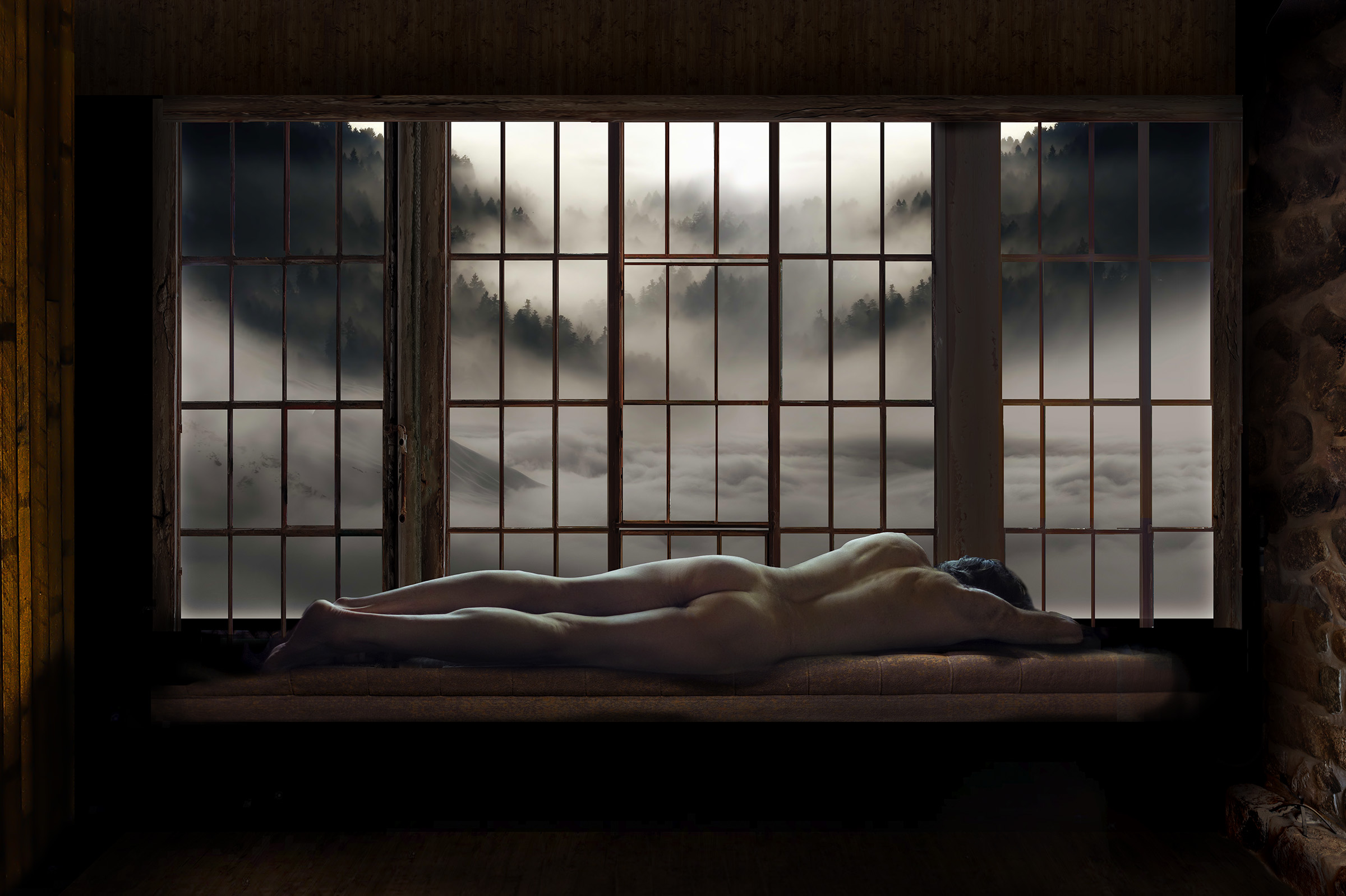
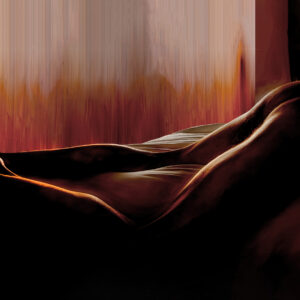
In Wintering, a solitary figure lies stretched beneath a broad wall of windows. The cabin is dark and protective, its wood and stone barely emerging from shadow. Outside, the landscape is luminous and seemingly without end. Mountains and evergreens rise and disappear through mist, while snow and cloud merge until it becomes difficult to know where earth ends and sky begins.
The body occupies the narrow space between these worlds. Its long horizontal form echoes the layers of the landscape beyond—the snowfields, banks of cloud, and distant ridgelines. Yet the figure is neither looking at the view nor presenting itself to the viewer. It is simply resting.
That distinction matters to me. We often approach dramatic landscapes as something to see, photograph, conquer, or possess. Here there is nothing to accomplish. The figure has relinquished the need even to look. The landscape continues beyond the windows whether anyone observes it or not.
The title Wintering refers both to a season and to a state of being. Winter asks living things to conserve, wait, and endure. Human beings are not exempt from those rhythms, however much we may pretend otherwise. Rest can be its own form of attention.
The windows divide the wilderness into panels, as though we could contain it within a series of pictures. But beyond those panes the mountains continue into mist. The small, vulnerable body inside the cabin becomes another element within that larger world—temporarily sheltered from winter, but never truly separate from it.




Reviews
There are no reviews yet.