
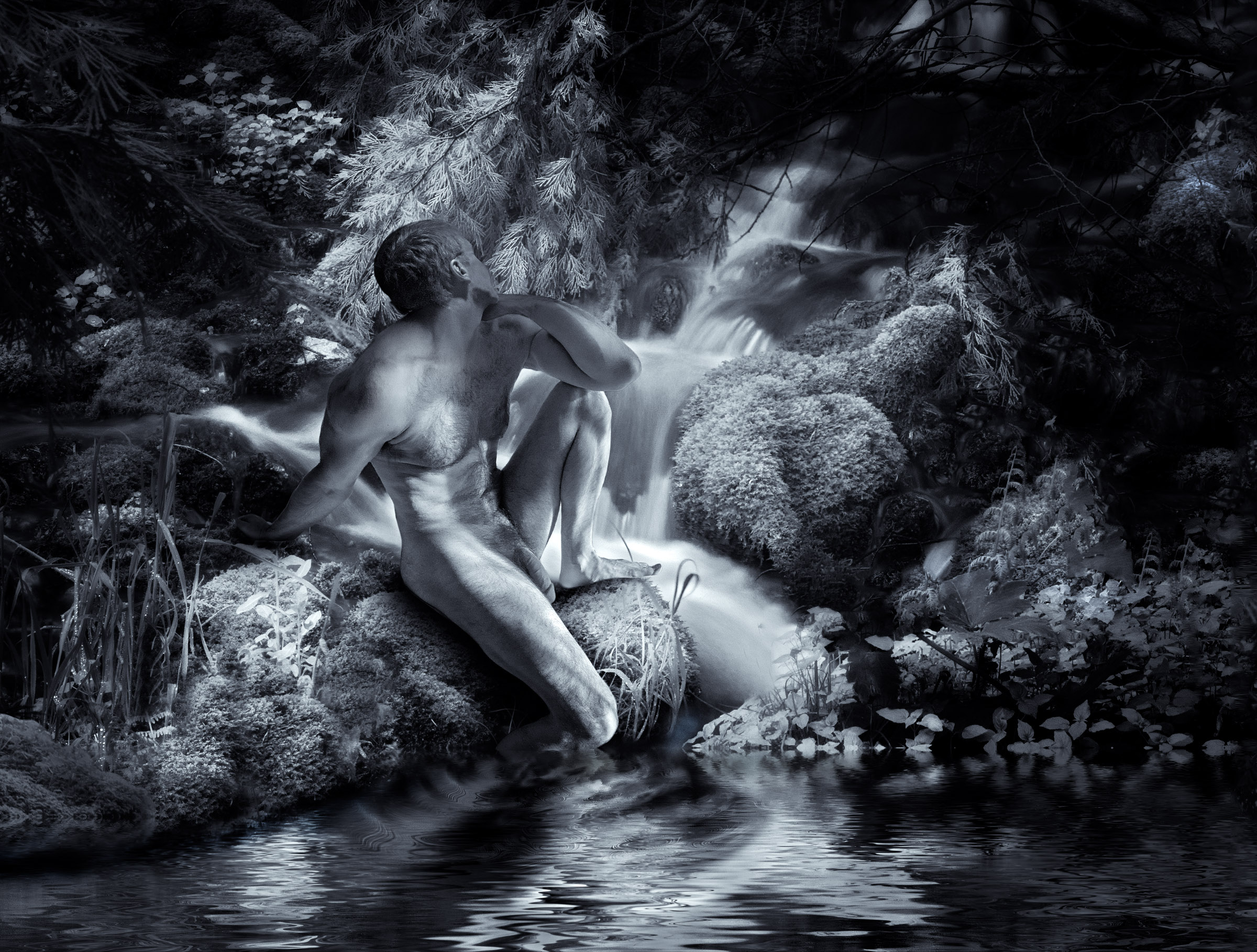

Classical painting is filled with images of nude women reclining beside streams, pools, and waterfalls—figures who often appear serene and self-contained, their eyes closed or their gazes turned away from the viewer. Male figures inhabiting these scenes are frequently clothed. I wanted to reverse that convention and see what might happen if a male body were given the same contemplative, vulnerable presence.
My particular reference was Adam Elsheimer’s Apollo and Coronis, painted around 1608. Rather than recreate the painting literally, I borrowed something of its mood and visual language, imagining Coronis’s quiet pose without the clothed Apollo lurking in the shadows. The figure here does not confront the viewer. His attention seems directed elsewhere—toward the falling water, the surrounding forest, or perhaps inward.
The setting is a small seasonal waterfall and pond in the North Cascades, a place easily overlooked. Shafts of sunlight and a moss-covered rock provided a natural stage, while the sweeping “S” of the waterfall continues into its reflection and echoes the curves and diagonals of the body. Figure, water, and landscape begin to feel less like separate elements than parts of a single composition.
In reality, the scene was intensely green, but color seemed too literal for the atmosphere I wanted. Photographing in infrared transformed the foliage into pale luminosity, deepened the shadows, and gave the skin an almost sculptural glow. The result lies somewhere between photograph, painting, and dream—a contemporary male figure placed within an old artistic tradition, but asked to occupy it differently: not heroic or commanding, but unguarded, reflective, and quietly at home within the landscape.







Reviews
There are no reviews yet.